The houses and the pipe in them
Pre-1960 farm-town houses, galvanized lines and clay-tile laterals
A railroad junction that became a cotton town, with plumbing to match its age.
Granger grew up in 1882 where two branches of the Katy railroad crossed, and Czech farmers soon made it a cotton town. It incorporated in 1891, and by 1910 it had its own waterworks, an electric plant and a cotton compress.
The population peaked above 2,000 in the mid-1920s and stood at 1,183 in 2020. The town has shrunk since its heyday, so much of the housing is old. Many homes still carry galvanized steel supply lines and clay-tile sewer laterals laid in short sections.
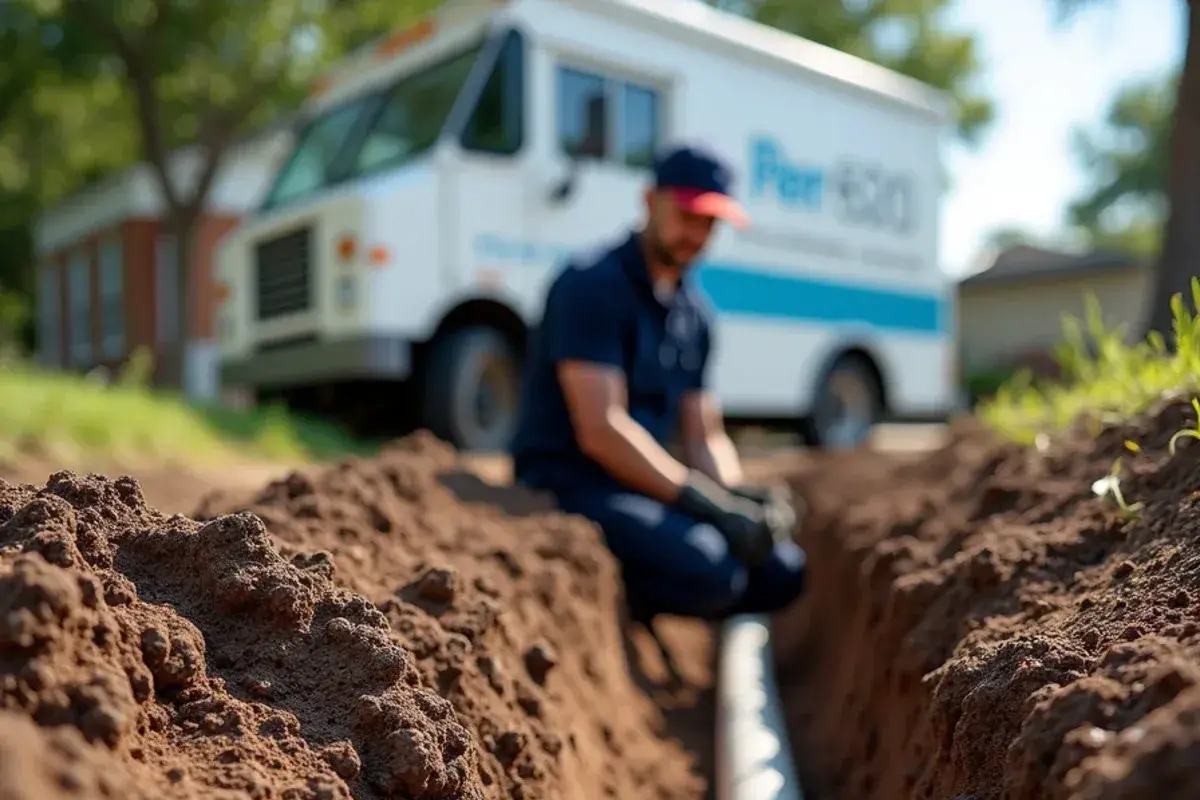
Clay tile fails at the joints. Each short section meets the next at a bell, and roots, settling and shrink-swell blackland soil pry those joints apart until the line sags or packs with roots. A backup in the lowest tub or shower is the usual first warning.
Galvanized pipe gives different signs: weak pressure at one fixture, then several, then rust-coloured water after the line sits overnight. Patching one joint rarely ends it, because the rest of the run is the same age and corroding at the same rate. Rust flakes from those lines also settle in the water heater and clog faucet aerators.
Local knowledge
Davilla Street bricks, the Corps lake on the San Gabriel and the town sewer
Streets, water and wastewater, and what they mean for the pipes under a house.
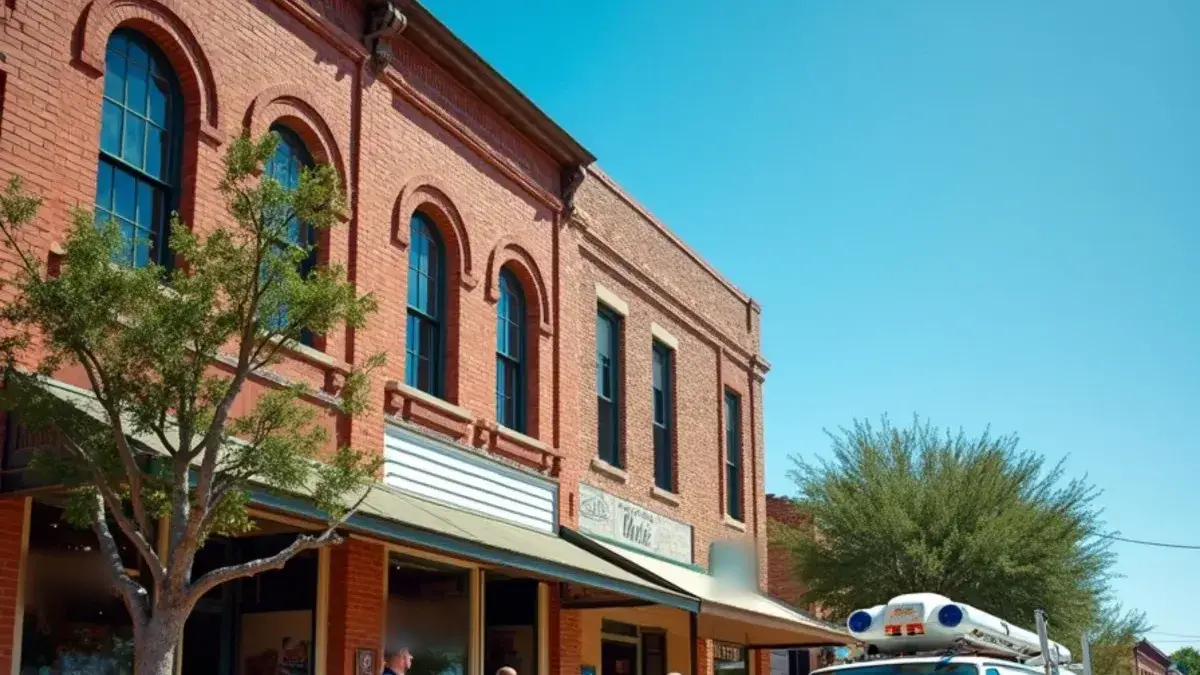
Davilla Street was platted 100 feet wide in 1884 and paved with brick in the summer of 1912. The Handbook of Texas notes that Granger was then the only Texas town under 5,000 people with paved streets. City Hall still occupies the 1908–09 Farmers State Bank building on that street.
The lake lies about seven miles east along FM 971, where the Corps of Engineers dammed the San Gabriel River. Impoundment began in January 1980 and the lake opened to the public in March 1981. It also feeds the regional treatment plant that supplies Taylor.
Wastewater flows to the city treatment plant on Lamb Street, which discharges toward Willis Creek and on to the lake. In most Texas towns the lateral from the house to the city main belongs to the owner, so a root-filled line is a private repair. Typical calls here are sewer backups, yard-line leaks and water heater swaps.