

Know the line
Where does your yard water line run, and who owns it?
Every house on a public system has a short stretch of buried pipe that belongs to the owner, not the utility.
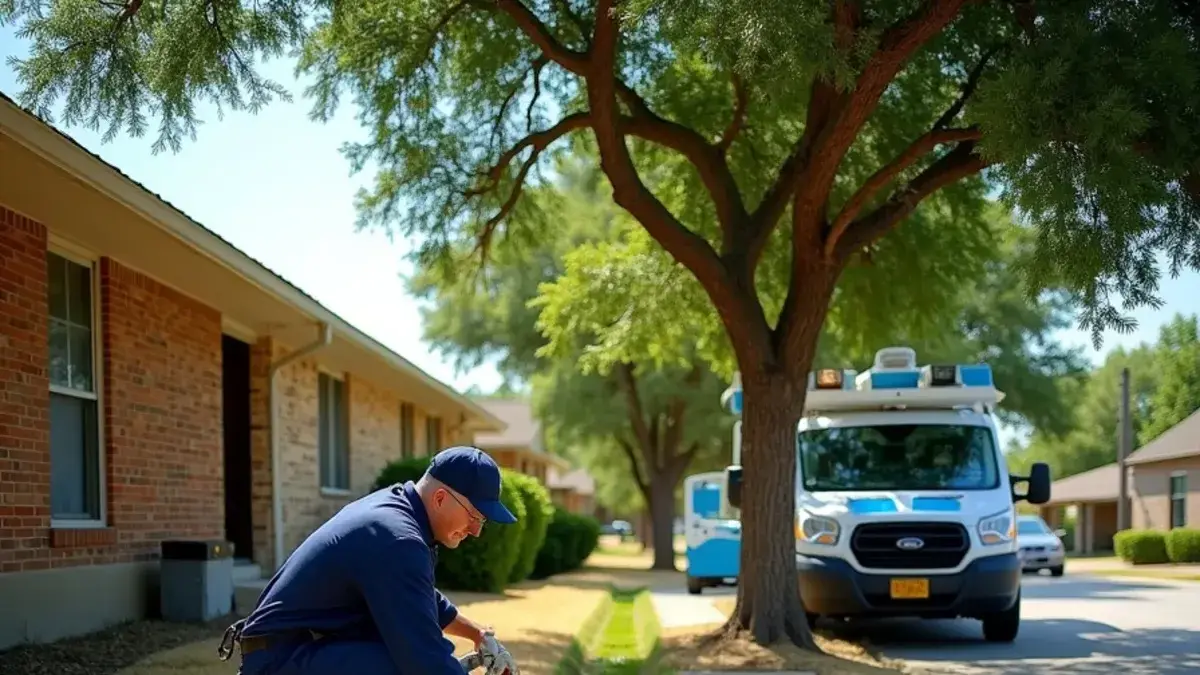
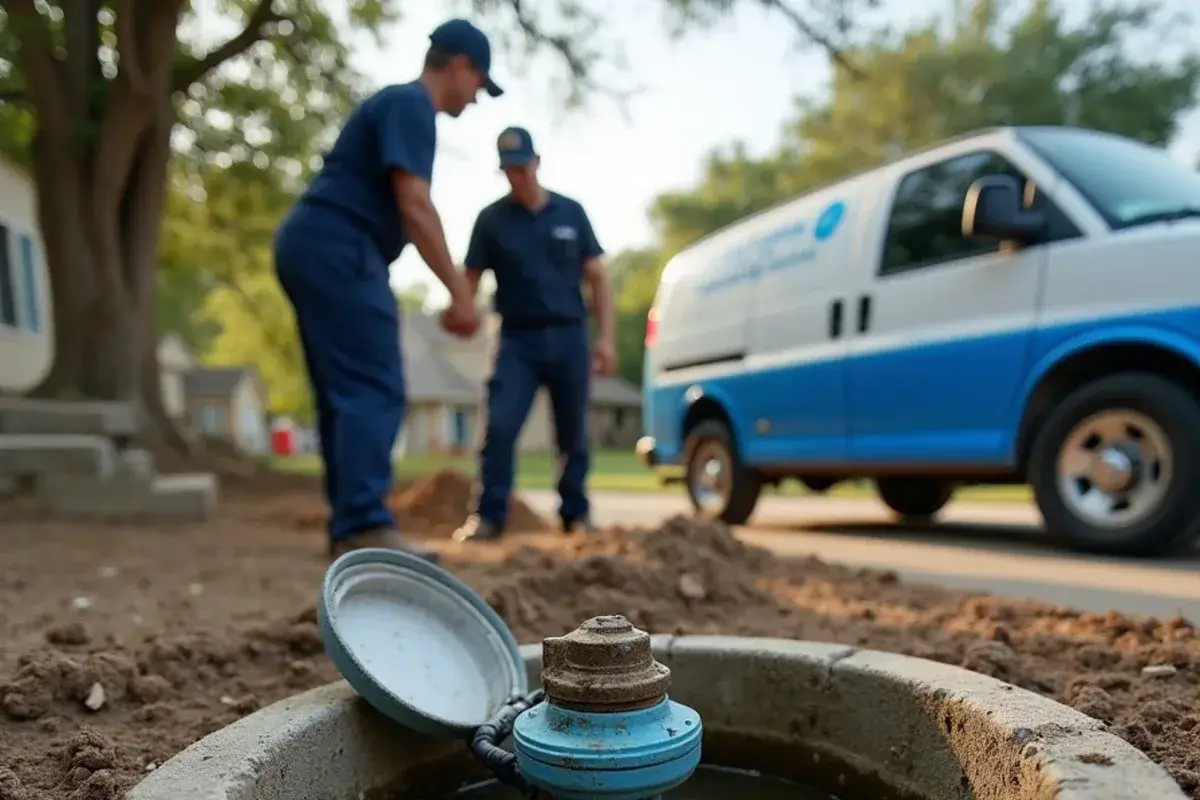
Water reaches the house through a service line that starts at the meter, usually in a box near the street or the property line. From there a buried pipe crosses the yard to the foundation, where it rises to a shut-off valve and enters the plumbing.
That yard stretch is typically yours. Georgetown Utility Systems, for example, takes responsibility from the property line to the city connection, and the lines on the homeowner's property are the homeowner's to repair. MUDs, water supply corporations and other cities draw the line in slightly different places, so check with your own provider.
The pipe itself depends on the decade. Older homes may have galvanized steel or copper. Many later lines are PVC or flexible polyethylene, with fittings at each joint. Every fitting and every spot where the pipe crosses a rock edge or a tree root is a candidate for a leak.
On acreage the line can be very long. Out on FM 971 in Weir, a meter often sits at the road with the house several hundred feet back. A barn or trough may be tapped off along the way.
What to look for
Signs of an underground water leak you can see, hear or measure
One sign alone can have another cause. Two or three together usually point to the yard line.
Check for these between the meter and the foundation:
- A soggy patch or a strip of greener grass that stays wet in dry weather
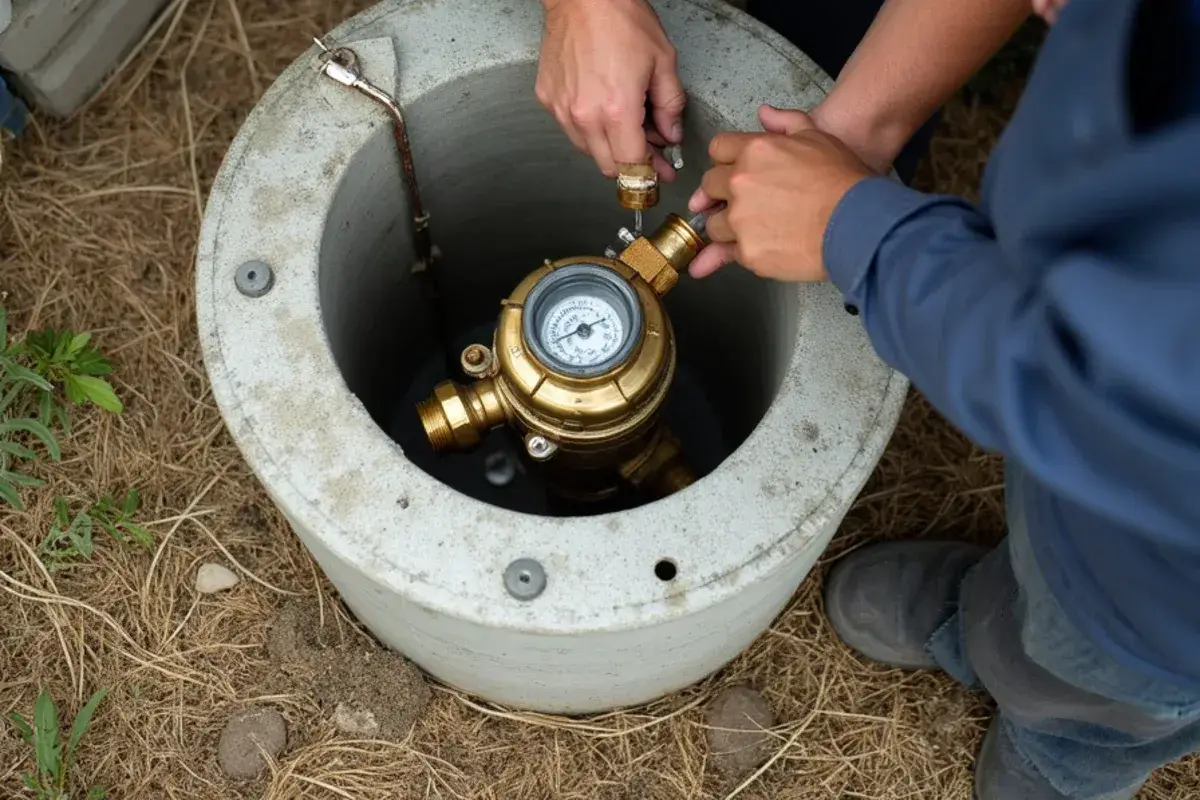
- Water standing in the meter box when it has not rained
- A dip, a small sinkhole or soft soil along the route of the line
- A hiss or trickle at the meter, or at the hose bib nearest the line
- A water bill that jumps with no change in use
- Pressure that slowly drops at showers and sprinklers
- Cloudy or rusty water after the pressure has dipped
- A well pump that kicks on when nobody is using water
Pressure deserves a closer look. A leak in the yard line bleeds off flow before it reaches the house, so the loss shows most when two fixtures run at once. A failing pressure-reducing valve or a utility main break can also drop pressure, so pressure alone is a clue rather than proof.
Do not ignore the bill. A slow underground leak runs every hour of every day, and the meter is often the first place it shows up. Compare this month with the same month last year rather than with last month, because irrigation season skews the numbers.
Do it yourself
How do you run a meter test on the yard line?
The meter is the most accurate leak detector you own. This test takes about half an hour and needs no tools beyond a meter key or a screwdriver.
Stop every planned use of water
Close faucets, set the irrigation controller to off, and pause the softener and the ice maker. Ask everyone in the house not to flush for a while.
Read the meter and the leak indicator
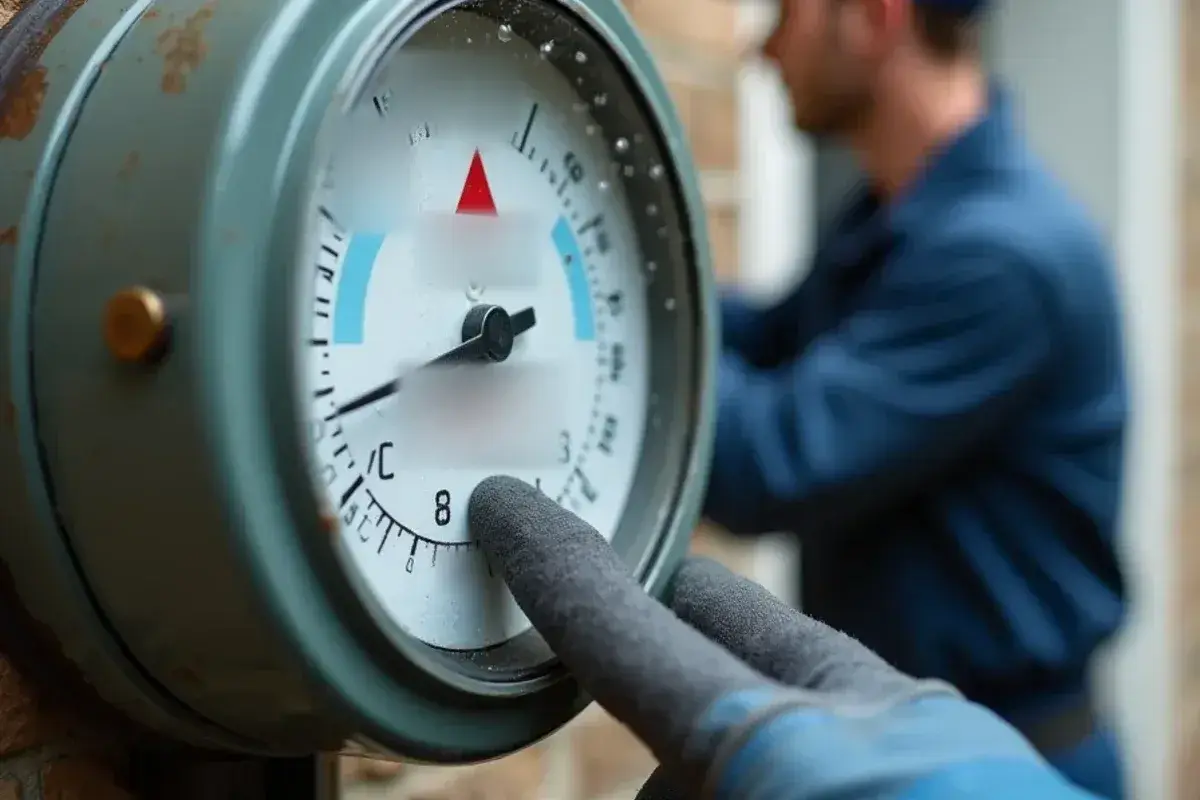
Lift the lid and find the small triangle or star dial. Photograph the full reading so you have a starting number.
Wait, then read again
Leave everything off for 15 to 30 minutes. If the indicator turns or the reading rises, water is leaving somewhere past the meter.
Close the house shut-off valve
Find the customer valve where the line enters the house, often near the front foundation or in the garage. Close it fully.
Read the meter a third time
If it still moves with the house valve closed, the leak is in the buried line between the meter and that valve. If it stops, the leak is inside the house or in a branch past the valve.
On a private well there is no meter, so the pressure tank becomes the gauge. Shut off every fixture and watch the pressure switch. If the pump keeps cycling on with nothing running, water is escaping between the tank and the taps.
That matters around Florence, where acreage up SH 195 often runs on wells with long service lines to the house and outbuildings. A pump that short-cycles is both a leak warning and a pump wearing itself out.
Expert insight
Why clay, limestone and long rural lines hide leaks
The ground decides whether a leak shows up as a puddle or vanishes. Williamson County has two very different grounds.
East of I-35 most yards sit on Blackland Prairie clay. Clay holds water near the surface, so a yard-line leak tends to show as a soggy spot. The catch is that the wet patch can sit downhill of the actual leak, because water runs along the trench backfill before it surfaces.
Clay also moves. It shrinks in a dry August and swells after rain, and that cycle flexes buried pipe at fittings and where it rises into the slab. Leaks on clay lots often appear right after the first big rain following a drought.
West of I-35 the Edwards limestone behaves the opposite way. Water finds a fracture in the rock and drains away, so a leak can run for months with no wet spot at all. On those lots the meter test and acoustic listening matter more than walking the yard.
Two impostors catch people out. A cracked irrigation lateral or a stuck zone valve makes a soggy patch that looks exactly like a yard-line leak. On septic properties, a wet area over the drain field can be wastewater rather than supply water. Shut the irrigation off and repeat the meter test before blaming the main.
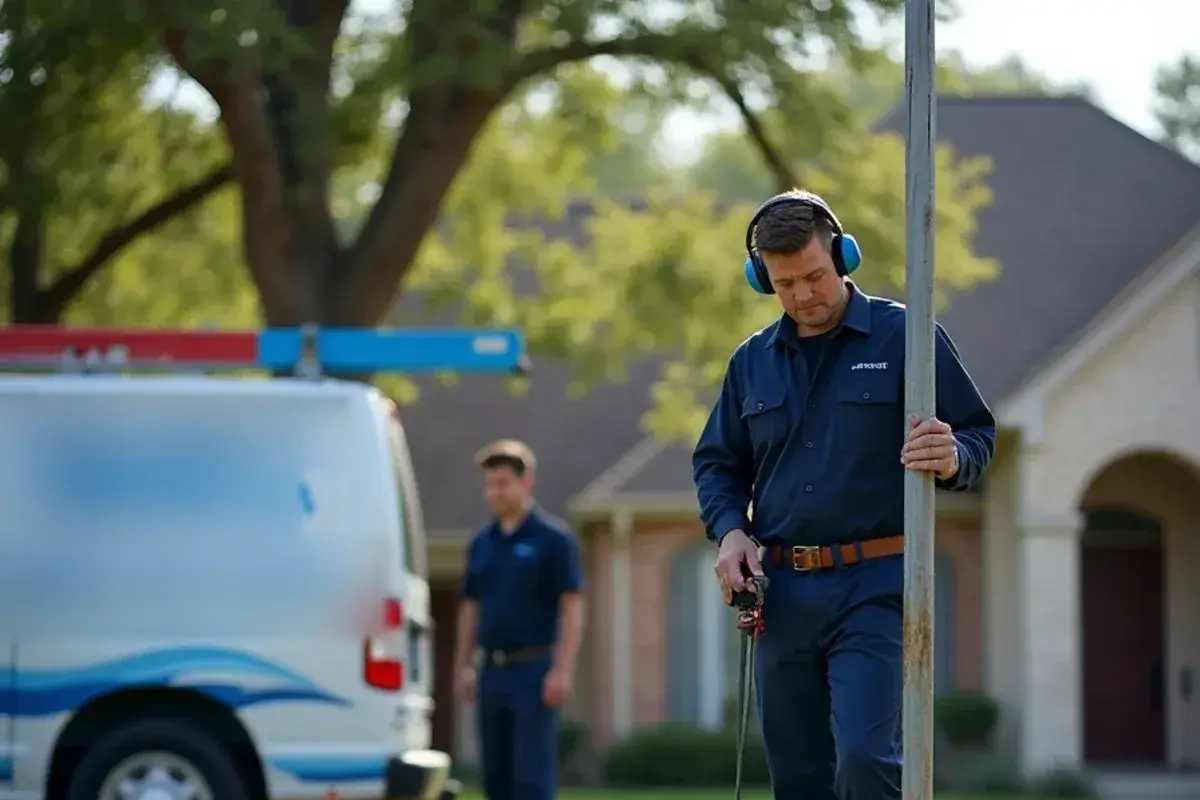
Once a leak is confirmed, leak detection narrows it to a few feet with ground microphones or a tracer gas. That turns a dug-up yard into a single small hole. The honest trade-off comes next: a spot repair on a line full of aging fittings may only move the next leak a few yards along.
Next steps
Before anyone digs: Texas 811 and what the repair looks like
Finding the leak is half the job. Opening the ground safely is the other half.
Texas law requires a call to 811 before digging, with at least two business days' notice, so buried gas, electric and communication lines are marked. That applies to a homeowner with a shovel as much as to a plumber with a trencher.
Locators mark the utilities' own lines. Your yard water line, sprinkler pipes and septic lines are usually not on their maps. The leak search and a careful hand dig still matter around the marks.
Repair options depend on what the line shows. A single failed fitting on a newer line is a short excavation and a coupling. An old galvanized or brittle line with several leaks is usually better replaced along a new route, and our water line repair page explains how that work runs.
Either way, we quote on site before the work starts, and we pull a permit when the job requires one. Keep the house valve closed between uses until the repair is done if the leak is large.