Young houses, restless ground
2000s production homes on Blackland Prairie clay
The houses are young. The clay under them has been moving for a very long time.
For most of its life Hutto was a railroad and cotton-gin town. The Handbook of Texas counts about 1,250 people in 2000, and the 2020 census found 27,577. Nearly every house you drive past went up after that, built quickly by production builders from a handful of plan sets.
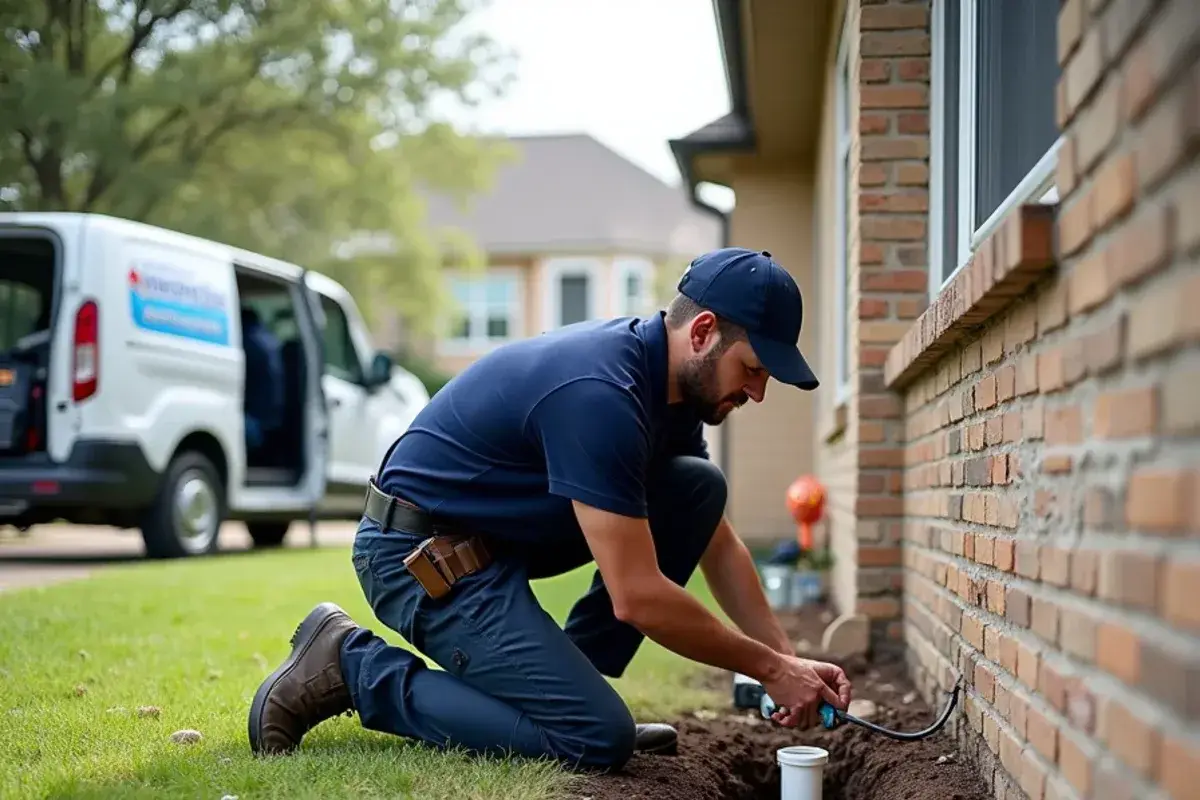
The ground under them is blackland clay, which swells when it is wet and shrinks hard in August. A slab on that clay flexes a little every season. Supply lines and drain joints under the slab take the strain, so slab leaks appear in houses only fifteen or twenty years old.

The other clock is the water heater. Builder-grade tanks from the 2005–2010 building wave are now past the 10–15 years energy.gov gives a storage heater, so whole streets reach their first replacement at once. Years of sediment sit in the tank bottom by then, and the burner or element works harder to heat through it.
Young houses clog in their own way too. Construction debris left in a line, flushed wipes and a section of main that has sagged in moving clay cause most backups. None of them means the house was built badly.

Local knowledge
US 79, Cottonwood Creek and three water providers
Who supplies your water decides who you call when the problem is past the meter.
The town began in 1876, when the International-Great Northern Railroad bought land from rancher James Emory Hutto for a station. It sits on US 79 at FM 1660, near Cottonwood Creek, about seven miles east of Round Rock, and it incorporated in 1940.
Water is the local surprise. The city lists three providers inside the community: the city itself, Manville WSC and Jonah Water SUD. City water comes largely from Carrizo-Wilcox wells in eastern Williamson County, topped up with Lake Granger water bought from Taylor and supply from Manville.
That matters when something breaks. A blockage in the public sewer main belongs to whoever provides your wastewater, and Jonah handles that for several subdivisions, including Mustang Creek and Emory Crossing. Inside the house and yard, it is a plumbing call. And yes, the hippo statues are official: the Legislature recognised the hippo as the town’s emblem in 2003.