

Right now
What should you do first when the water heater is leaking?
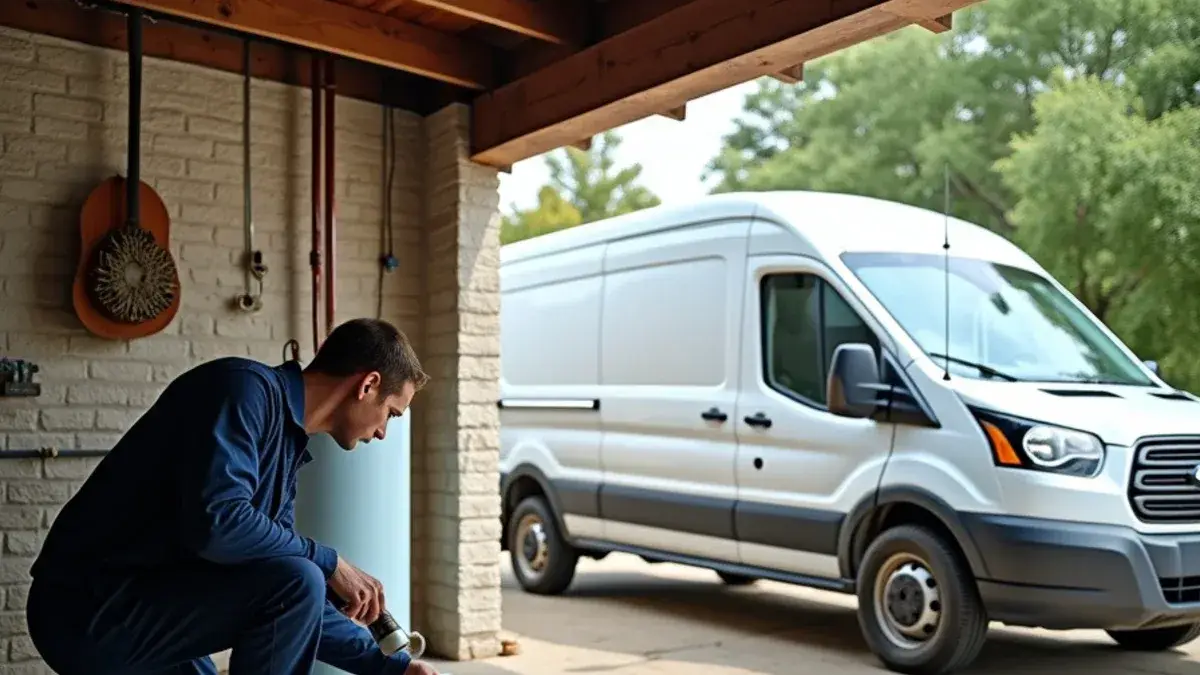
Make it safe, stop the supply, then look. Twenty minutes of the right moves prevents most of the damage.
A leaking water heater rarely floods a house in minutes, but it never stops on its own. A 40- or 50-gallon tank is fed by the house supply, so it keeps refilling whatever escapes until someone closes the valve.
Shut off the heat source
On a gas tank, turn the control knob to "off". On an electric tank, switch off its double-pole breaker. Heating a tank that is losing water can damage the burner or the elements.
Close the cold-water inlet
The valve sits on the cold line above the tank, usually marked or on the right. Turn it clockwise or set the lever across the pipe. If it will not close, use the main shut-off.
Relieve the pressure
Open a hot faucet somewhere in the house. That takes pressure off the tank and often slows a leak at the top to a drip.
Contain the water
Set towels and a shallow pan under the drip. For an attic tank, check the ceiling below and the pan drain line for overflow.
Drain only if the tank itself is leaking
Run a garden hose from the drain valve to a floor drain or outdoors and open it. The water is hot, so keep hands and pets clear.
Photograph and call
Take pictures of the label, the leak point and any wet drywall. The label shows the model and the manufacture date, which a plumber will ask for.
Smell gas near the heater?
Do not touch the gas valve. Atmos Energy’s guidance is to leave the house, then call 911 and Atmos at 866.322.8667 from a safe distance. Our gas smell guide explains why.
Diagnosis
Where is the water coming from?
Dry the tank with a towel, wait a few minutes, then follow the water uphill to its first wet spot.
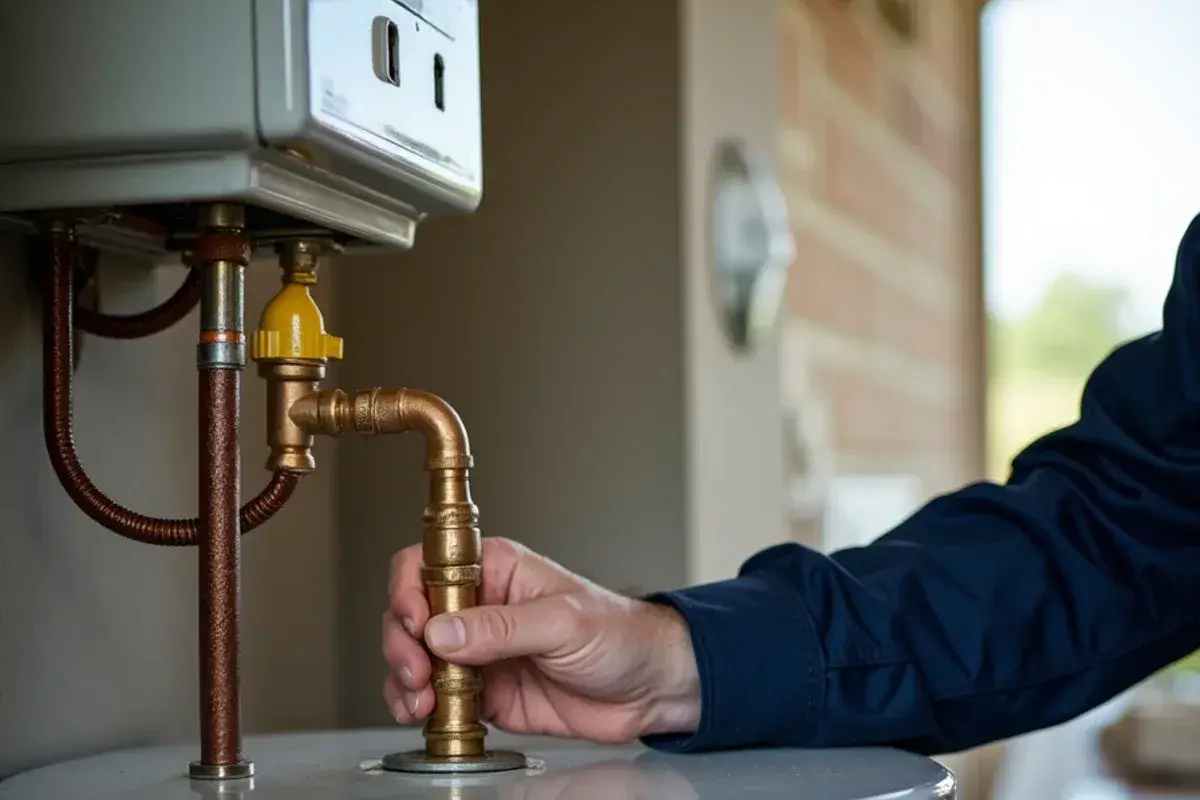
Water runs down the jacket and pools at the base, so a puddle under the tank says little about where it started. Check the top connections first, then the relief valve and its pipe, then the drain valve, and only then blame the tank.
| Where it leaks | Likely cause | Usually |
|---|---|---|
| Pipe connections on top | Loose union, corroded nipple or a worn flex connector | Repairable |
| Relief valve or its discharge pipe | Too much pressure or heat, or a worn valve | Repairable once the cause is found |
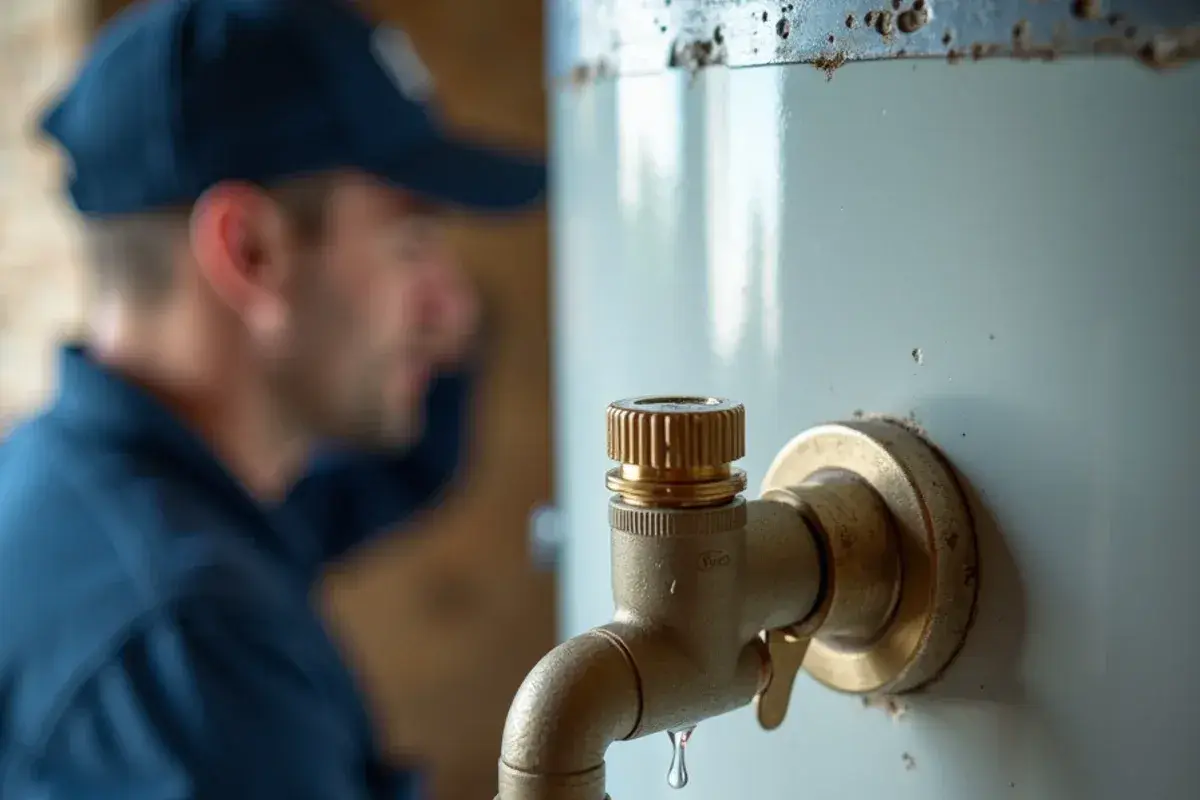
| Drain valve near the bottom | Worn plastic valve or debris in the seat | Repairable; a brass replacement or cap |
| Beads of water on a gas tank after a refill | Condensation from cold incoming water | Normal; it fades as the tank heats |
| Rusty water from under the jacket | Corroded steel tank | Replace the heater |
| Puddle but a dry tank | Softener, AC condensate or a nearby supply line | Not the heater at all |
A relief valve that drips or spits is doing its job, not failing. It opens when pressure or temperature climbs too high. Replacing the valve without finding out why it opened only hides the warning. If the source is unclear, a water heater repair visit starts with exactly this trace.
From the trade
Repair or replace: what age, sediment and pressure tell a plumber
The leak is a symptom. The tank’s age and the house’s water pressure decide what is worth fixing.
Energy.gov puts the life of a storage water heater at about 10 to 15 years. Inside, a sacrificial anode rod corrodes so the steel does not. Once the anode is gone, the tank rusts from within, and the first sign is often a slow seep at the base.
Hard water speeds that up. Minerals drop out as the water heats and settle as sediment on the bottom. On a gas tank, that layer insulates the steel from the water above it, so the bottom runs hotter and fails sooner. You hear it as popping or rumbling while the burner runs.
Pressure is the quiet cause. A pressure-reducing valve or a meter check valve makes the plumbing a closed system, so heated water has nowhere to expand. Without a working expansion tank, pressure spikes every heating cycle, the relief valve weeps and fittings loosen.
A common trade rule of thumb helps. A valve or fitting leak on a tank under about eight years old is worth repairing. A tank-body leak at any age, or any leak on a tank near the end of its range, points to replacement. Those are the choices you should hear on site, with both prices, before any work starts.
Leaks also hide in walls and subfloor, as one of our Google reviewers found. "We discovered the water had been leaking more than initially thought, which caused wood and drywall to be wet around the water heater."
Replacing a heater is permit work. The City of Georgetown lists water heater replacement among the projects that need a permit, and Cedar Park and Leander require one too. The inspection checks the venting, the relief valve line, the gas connection and the pan.
Local homes
Attic and garage tanks in Leander and Cedar Park homes
Where the tank sits decides how much a small leak can damage.
In the 1980s and 1990s subdivisions of Cedar Park, such as Buttercup Creek, the original heaters are long past a 10-to-15-year life. Most of those houses are on a second or later tank. When the tank sits on a garage stand, a leak mostly wets concrete.
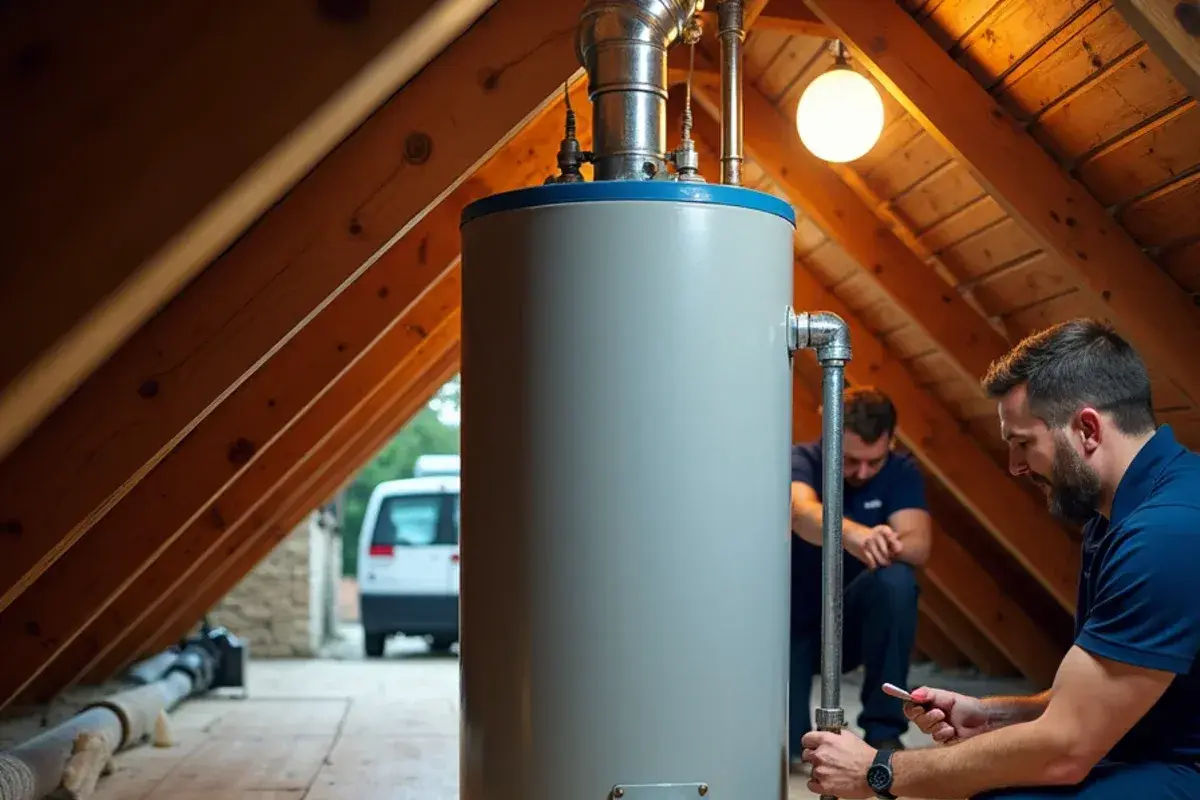
Newer homes along the 183A corridor in Leander, in places like Crystal Falls and Travisso, are mostly on their first heater. If yours sits in the attic or an upstairs closet, a leak drips through the ceiling. That makes the drain pan and its line to the outside matter far more.
Both cities draw treated Lake Travis water through BCRUA. Mineral content varies by source and season, so check your utility’s annual water quality report before you set a flushing schedule.
Prevention
How do you keep the next tank from leaking early?
A once-a-year check takes half an hour and catches most failures before the puddle.
Annual water heater check
- Read the manufacture date on the label and note the tank’s age
- Lift the relief valve lever briefly with a bucket under the discharge pipe; it should snap shut
- Drain a few gallons from the drain valve until the water runs clear
- Feel the expansion tank: the top half should sound hollow when tapped
- Check the pan for rust stains and make sure its drain line is clear
- Look for green or white crust on the top connections
- Fit a battery water alarm in the pan of an attic or closet tank
Have the anode rod checked around year four or five. Replacing a worn rod is a modest job, and it is the single biggest lever on how long the steel lasts.