

Cost drivers
What drives repipe cost in a 1970s–90s house?
A repipe is priced by the house, not by the foot of pipe. These are the parts that move the total.
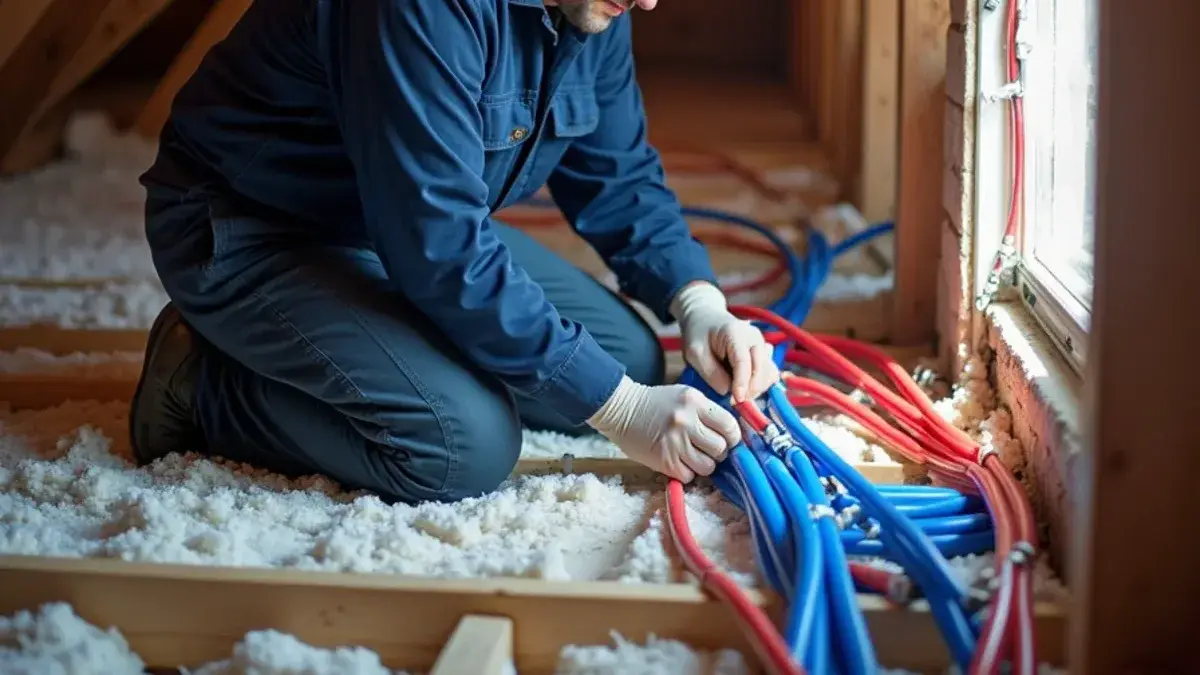
Two houses of the same size can need very different repipes. A single-story ranch with an open attic and one bathroom wall per fixture is quick to run. A two-story with tile showers, a finished bonus room and no attic over half the house takes far more cutting, fishing and patching.
This guide carries no prices, because nobody can price a repipe without walking the attic. What it can do is explain why quotes for the same square footage land far apart.
| Factor | Why it moves the total |
|---|---|
| Fixture count | Every sink, toilet, shower, tub, hose bib and appliance is another drop and another connection. |
| Stories and layout | A second floor means routing through walls and chases instead of straight down from the attic. |
| Attic access | Low roof pitch, blown insulation or no attic over part of the house slows every run. |
| Pipe material | Copper takes longer to join, and its material cost follows the metals market. PEX installs faster. |
| Wall openings and patching | Access cuts in drywall, tile or paneling must be closed, textured and painted. |
| Permit and inspection | Cedar Park, Round Rock, Georgetown, Leander and Pflugerville require a permit for a repipe. |
| Add-ons | A new main shut-off, pressure-reducing valve, hose bibs or water heater connections are often done at the same time. |
Slab homes add one more decision. In many 1970s–90s houses the original supply lines run under the slab, and a repipe usually abandons them and runs new lines overhead. That costs less than breaking concrete and removes the under-slab supply leak risk for good.
PEX vs. copper
PEX or copper: which pipe suits an older Central Texas house?
Both are sound choices when installed well. They fail differently and cost differently.
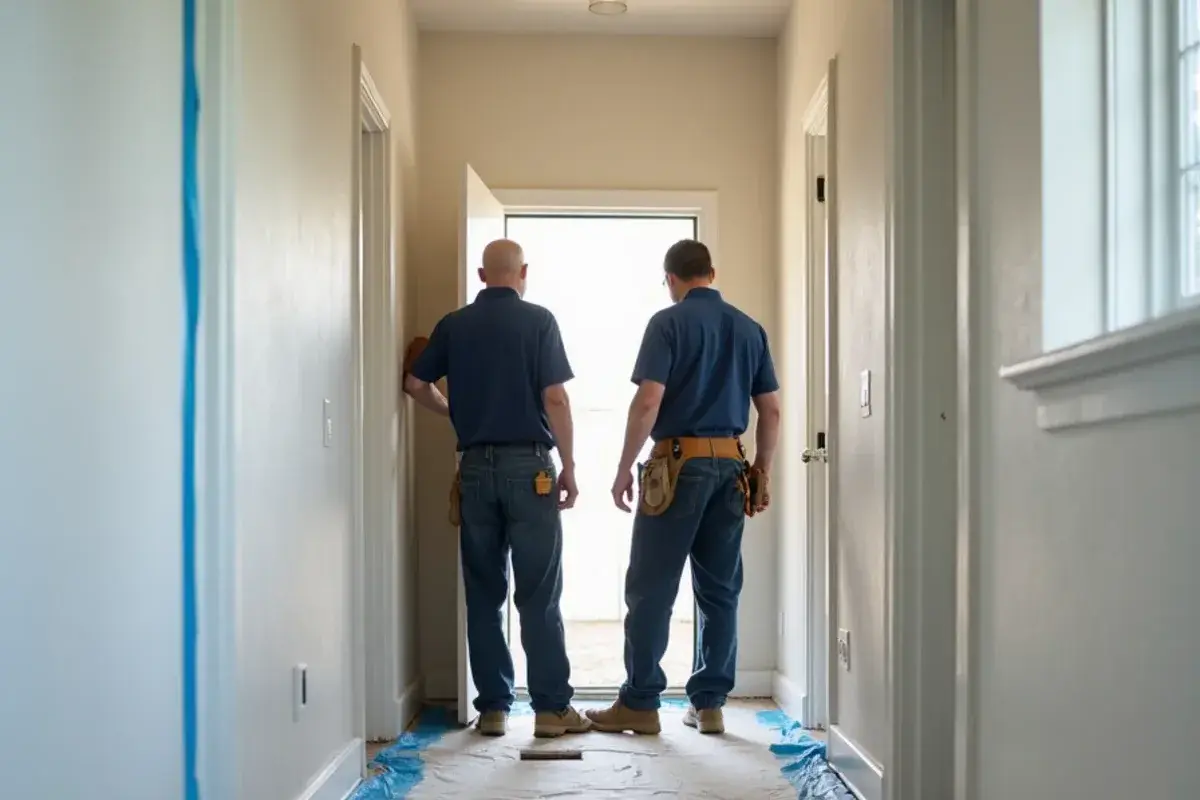
PEX is flexible cross-linked polyethylene. It bends around framing, so one run can go from a manifold to a fixture with few fittings in between. Fewer joints means fewer places to leak and fewer hours of labour, which is the main reason a PEX repipe usually costs less.
Copper is rigid and joined with solder or press fittings at every turn. It takes longer to install, but it shrugs off sunlight and heat, and many owners like how it looks in an exposed utility room. Hard water leaves scale inside both, though neither chokes the way old galvanized does.
| PEX | Copper | |
|---|---|---|
| Install time | Faster: long flexible runs, few fittings | Slower: a joined fitting at every turn |
| Freeze behaviour | Stretches with ice and often survives a mild freeze | Splits along its length when ice forms inside |
| Sunlight | Must be shielded from UV once installed | Unaffected |
| Heat near the heater | Needs the first length off the heater in metal per manufacturer rules | Handles heat directly |
| Noise and pressure surges | Flexible pipe softens water hammer | Can bang if not strapped well |
| Material cost | Lower and steadier | Higher and moves with the metals market |
The freeze row matters here. Winter Storm Uri burst pipes in attics and exterior walls across Williamson County in February 2021. PEX stretches where copper splits, which is no reason to skip insulation, but it is a reason to favour PEX for attic runs. Our whole-house repiping page covers how each material is routed and protected.
Know your era
Is your house in the polybutylene or galvanized era?
Build year is the fastest clue to what is in the walls, and to whether a repipe is coming.
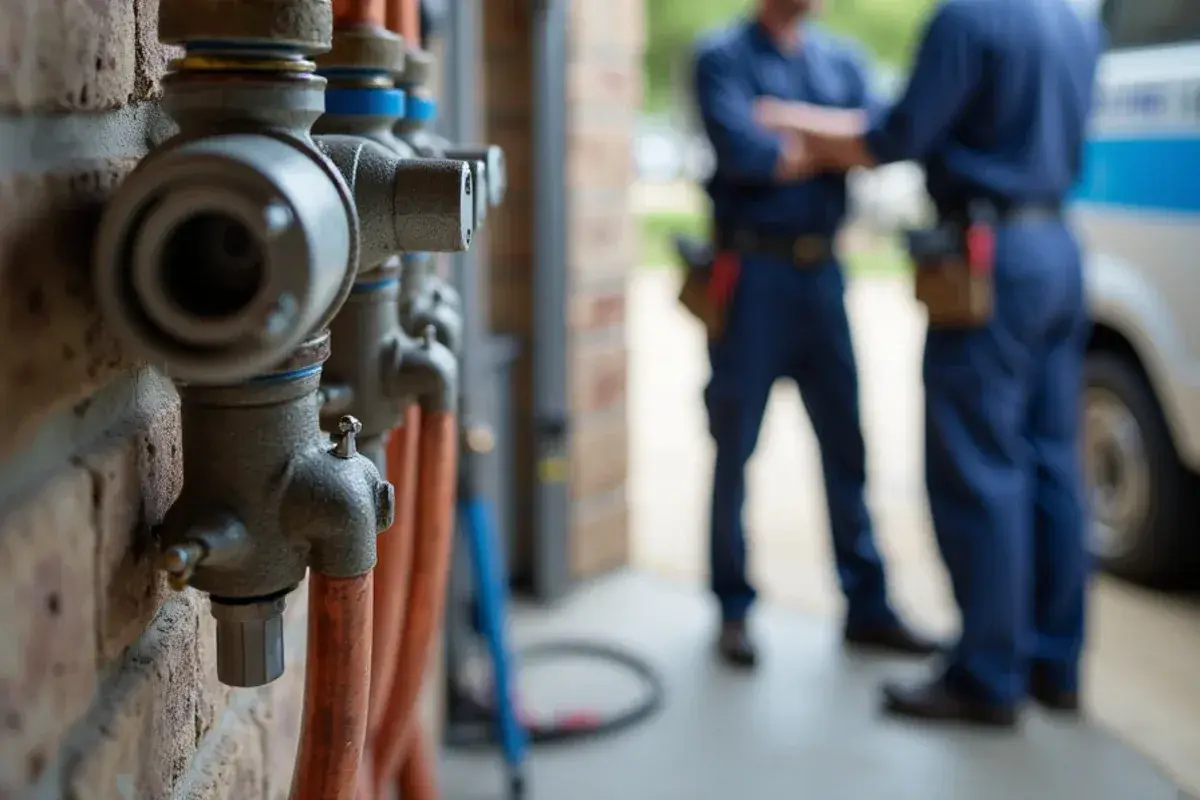
Polybutylene supply pipe went into homes roughly from 1978 to 1995. It is a grey flexible plastic, joined with metal crimp rings, and it tends to fail from the inside without warning. In Cedar Park, 1980s–90s subdivisions such as Buttercup Creek fall squarely in that window.
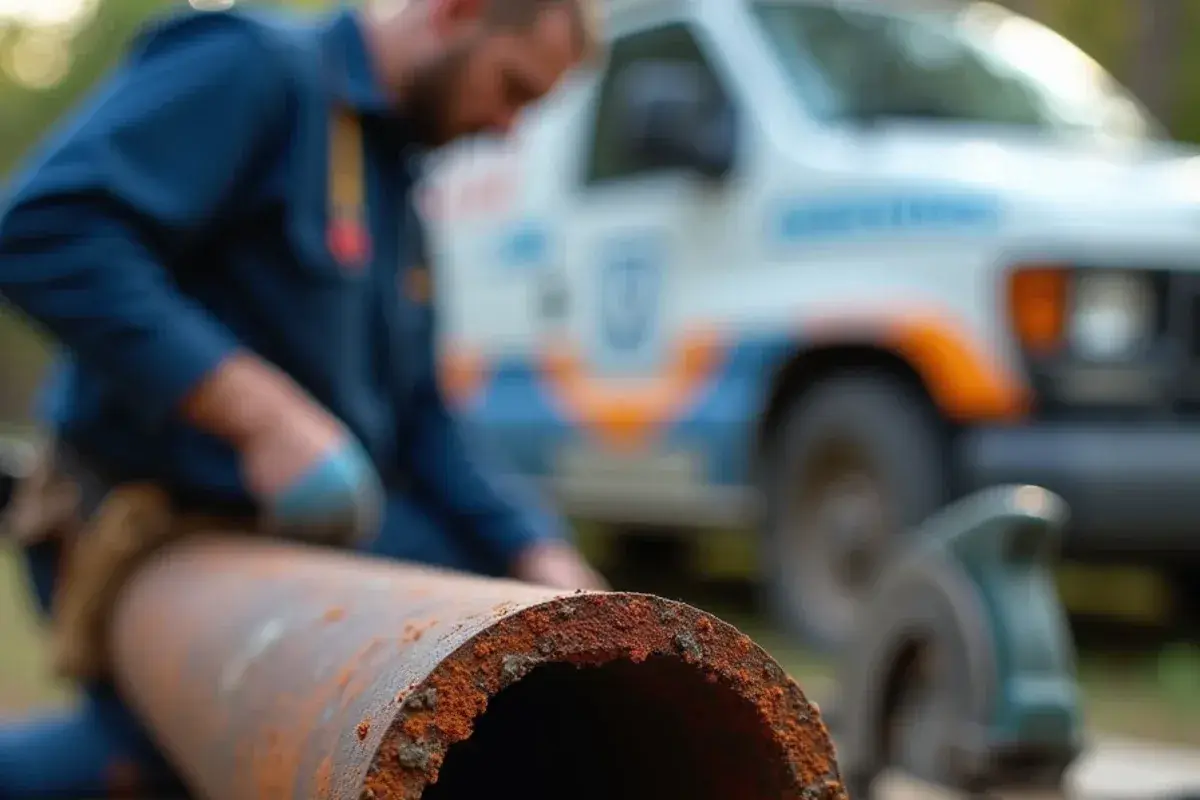
Older ranch houses carry a different problem. In Serenada, the large-lot subdivision off I-35, most homes date from the 1970s–80s and many still run original galvanized or copper supply lines. Galvanized steel rusts from the inside, so pressure fades slowly until a shower barely runs.
Signs the supply piping is near the end:
- Grey flexible pipe at the water heater, under sinks or at the main shut-off
- Brown or rusty water after the taps sit overnight
- Weak pressure at several fixtures that a new aerator does not fix
- Green crust or pinhole leaks on copper in more than one place
- More than one leak repair in the past few years
Expert insight
Whole-house repipe or spot repair: where the money goes further
A repipe is a big decision. Sometimes the honest answer is that you do not need one yet.
One failed fitting on otherwise sound copper is a repair, not a repipe. Cut out the bad section, join in new pipe, test and move on. If the rest of the line is clean inside and the house has had no other leaks, that repair can serve for many years.
The math changes with the pattern. Polybutylene anywhere in the system is a reason to plan, because its failures do not cluster in one place. Galvanized with poor pressure will not improve with spot work, since the restriction runs through every length.
Repeated pinholes in copper point the same way. When a second and third leak show up within a short stretch, each repair opens another wall and the next one is already waiting. Spending that money once on a repipe usually ends the cycle.
Partial repipes sit in between. Replacing only the hot side, or only the lines to one wing, can make sense when one branch is clearly worse. It saves money now, but it leaves old pipe in the walls and a second visit later.
The ground matters if the yard line is in the scope too. West of I-35, Edwards limestone sits close to the surface in places like Cedar Park, and trenching a new main through it is slow work. That is a separate line item worth asking about before you sign.
The process
What happens during a whole-house repipe, day by day?
Knowing the sequence makes it easier to judge a quote and to plan around the work.
Walk-through and quote on site
The plumber checks the attic, the fixtures and the main shut-off, then lays out PEX and copper options. We quote on site before any work starts.
Permit and layout
The permit is filed where the city requires one. Runs are planned from the main to a manifold or trunk, then out to each fixture by the shortest protected route.
Protect the house and open the walls
Floors and furniture are covered. Small access cuts go in behind fixtures and along hallways, sized to be patched cleanly.
Run and connect the new lines
New pipe goes in while the old system still supplies the house. Fixtures switch over in groups, which keeps the time without water short.
Pressure test and inspection
The new system is pressure tested for leaks with the walls still open, then the city inspector signs off before anything is closed.
Patch, texture and clean up
Access holes are closed, textured and made ready for paint. Ask any contractor up front who does the patching and how far the finish goes.