

The weak point
Why the outside faucets fail first when Central Texas freezes
Houses here are built to shed heat, not hold it. The plumbing that pokes through the wall pays for that first.
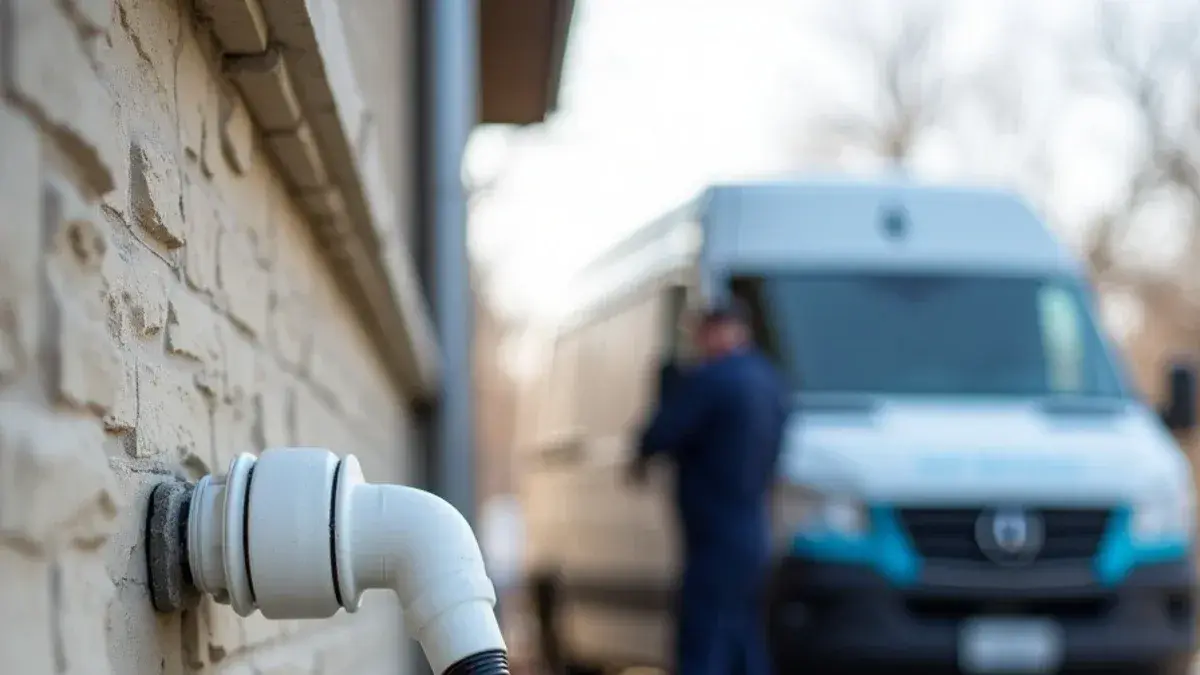
A hose bib is a short run of pipe that leaves a warm wall and ends in open air. On a north or west wall, with wind behind the cold, the water inside can freeze long before anything indoors does. Ice expands, and the split usually forms in the pipe behind the faucet rather than at the spout.
Winter Storm Uri in February 2021 showed how far that reaches. Pipes burst across Williamson County. The weak spots in any freeze are the same: exterior walls behind hose bibs, attics, and sprinkler backflow devices. Two of our Google reviewers describe repairs from that week.
Most freezes here are short, and most outdoor plumbing survives them untouched. The hard ones come every few years, and a long one can arrive with a power outage. Winterizing is cheap insurance against the rare night that does real damage.
Step by step
How do you winterize an outdoor faucet in Texas?
Work through these in the fall, then repeat the cover check whenever a hard freeze is forecast.
Disconnect every hose
Unscrew hoses, splitters and timers, and drain the hose before storing it. An attached hose traps water in the faucet body, even on a frost-free model.
Fix drips before the cold
A dripping bib builds an ice plug at the spout that backs up into the pipe. A new washer or cartridge is a small repair in October and a burst pipe in February.
Close the interior shut-off if there is one
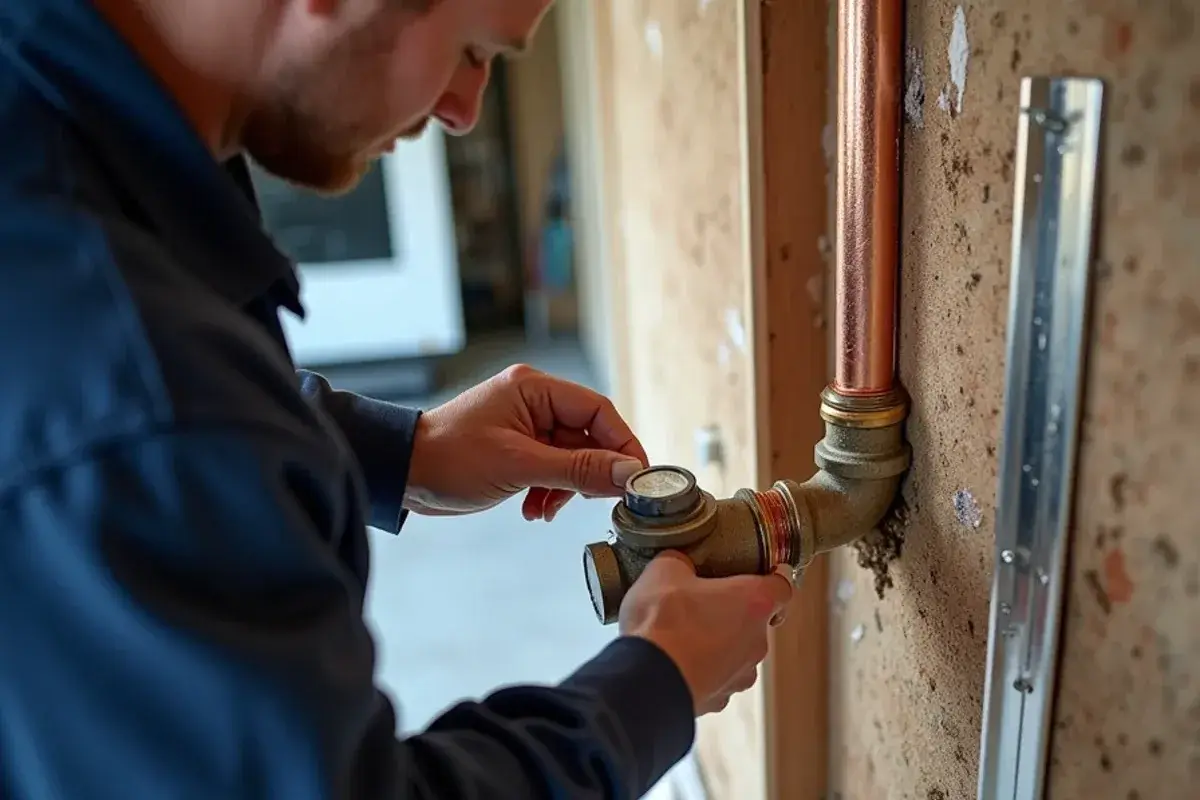
Some homes have a small valve inside, near the water heater or in a garage wall, that feeds an outside faucet. Close it, then open the faucet outside so the short run drains.
Fit an insulated cover
A foam or fabric cover traps a little of the wall's heat around the faucet. Seat it flat against the siding or stone so wind cannot get underneath.
Wrap exposed pipe near the wall
Any pipe visible above ground, such as a riser beside the foundation, gets foam pipe insulation taped at the seams.
| Fixture | Why it freezes | What to do |
|---|---|---|
| Standard hose bib | The valve seat sits outside the wall in open air. | Drain it, cover it, and consider a frost-free upgrade. |
| Frost-free sillcock | An attached hose or a level install traps water in the stem. | Remove the hose and check that it drains when opened. |
| Sprinkler backflow device | Brass body and test cocks sit above ground with no wall heat. | Turn the controller off, isolate it and insulate it. |
| Pipe riser at the foundation | A short exposed run where the line enters the house. | Foam insulation, plus a cover if it sits on a windy side. |
| Pool and outdoor kitchen lines | Long exposed runs far from the house. | Drain per the equipment maker's instructions. |
Expert insight
Frost-free sillcocks still split, and here is why
A frost-free faucet is a good upgrade. It is not freeze-proof, and the way it fails catches people out.
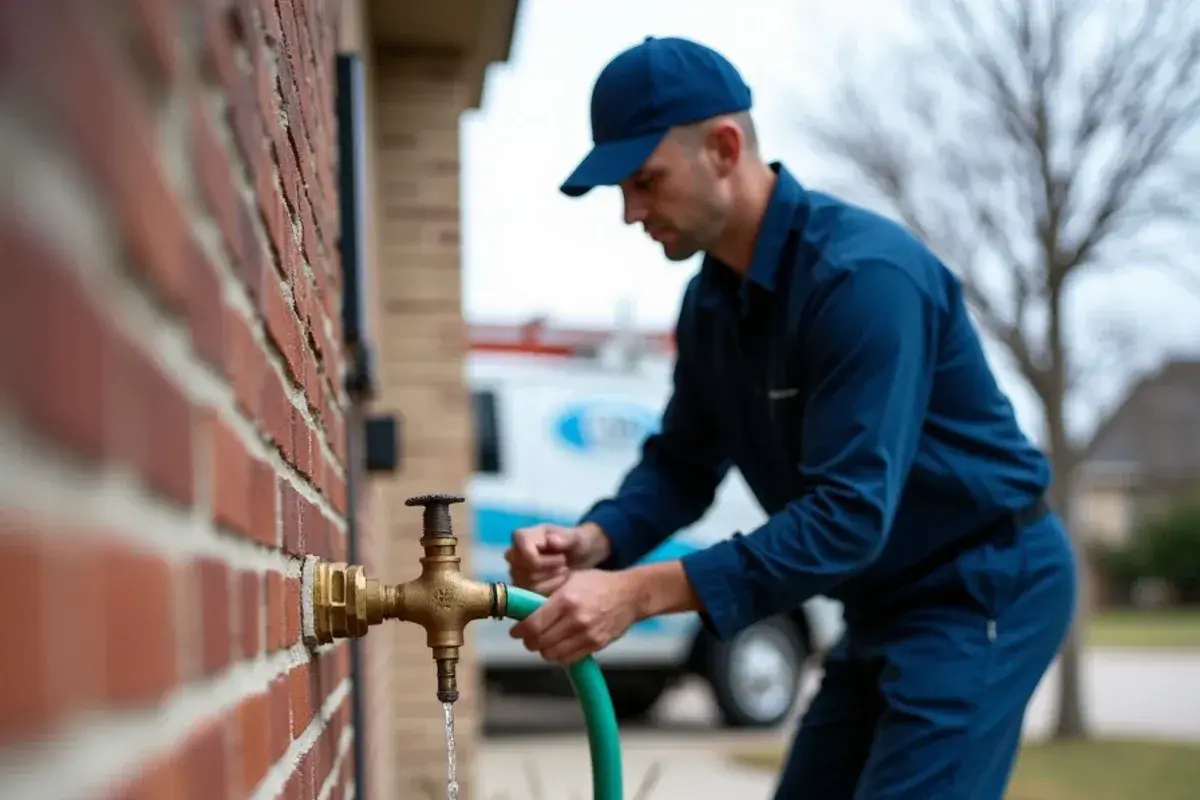
A frost-free sillcock moves the valve seat back inside the heated wall on a long stem. When you shut it off, the water in the stem should drain out of the spout. That only works if the faucet tilts slightly downward to the outside and nothing is attached to the end.
Leave a hose connected and the stem stays full. The ice forms inside the wall, the tube splits there, and nothing shows until spring. The first time someone turns the faucet on, water pours into the wall cavity instead of out of the spout.
So after any hard freeze, open each outside faucet once with someone inside watching the wall and any nearby ceiling. A wet patch or a hiss behind the drywall means a split stem, and the fix is a replacement sillcock, not a new washer.
Length matters too. The stem must reach past the insulation into heated space. On houses with thick walls or stone veneer, a stem that is too short leaves the seat in the cold zone. If a burst does happen, our burst and frozen pipe repair page explains what the repair involves.
Sprinkler systems
What about the sprinkler backflow device?
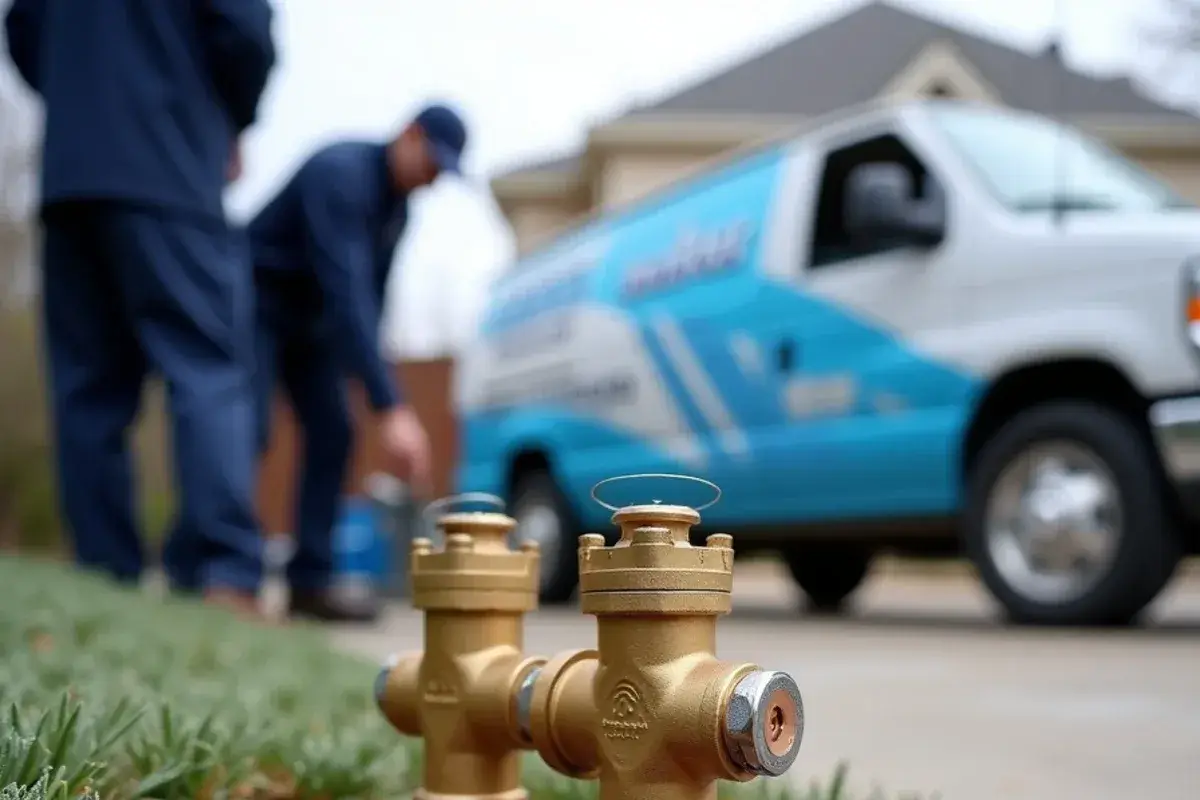
If you have an in-ground sprinkler system, the most exposed plumbing in your yard is probably the backflow device beside the house.
Texas irrigation rules require backflow prevention between the sprinkler system and the drinking water. Where there is a health hazard, the rule allows an air gap, a reduced pressure assembly or one of two kinds of pressure vacuum breaker. Many homes have a pressure vacuum breaker standing a foot or so above the ground.
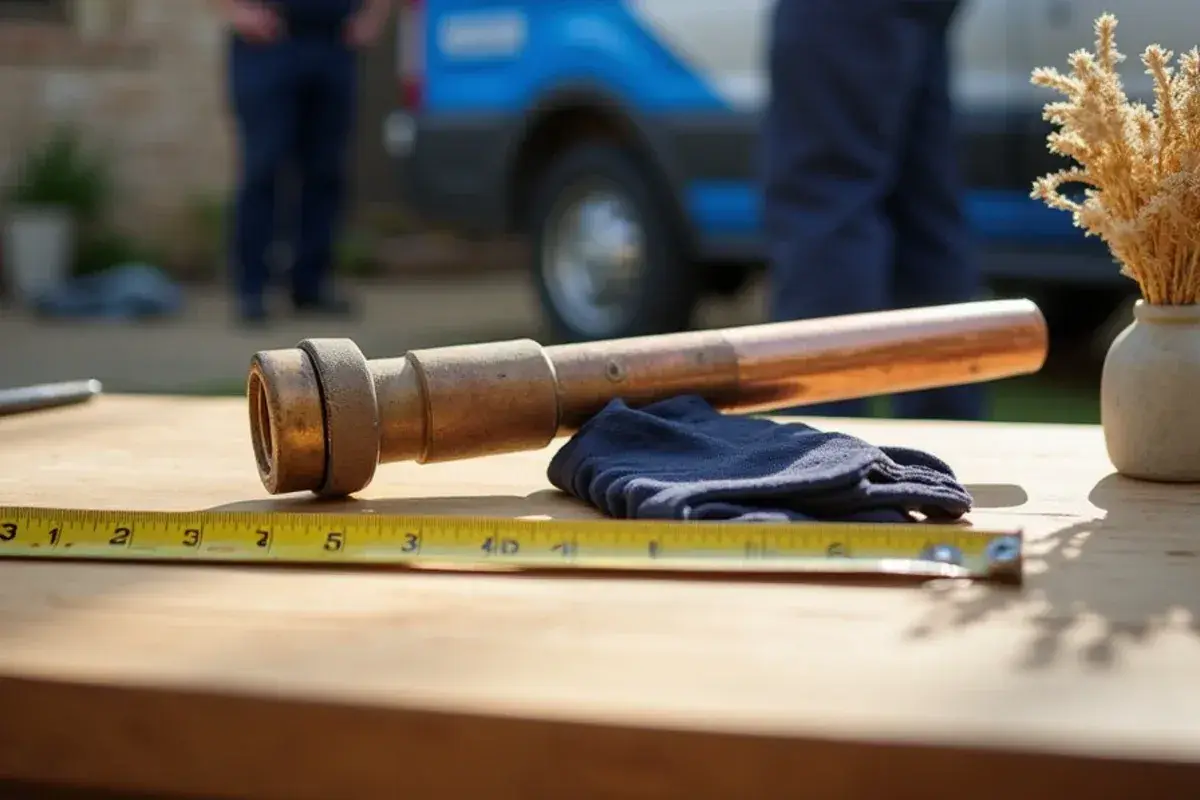
That device is all brass and small valves with no wall to borrow heat from. In a hard freeze the bonnet cracks or the body splits, and the next time the system runs it sprays water across the side yard.
Before a freeze, turn the controller off, close the isolation valve that feeds the device, and fit an insulated cover or wrap it, leaving the test cocks reachable. Some manufacturers also describe draining the body; follow the instructions for your model.
If it does crack, know who can fix it. TCEQ requires anyone who repairs or tests a backflow prevention assembly to hold its Backflow Prevention Assembly Tester license, and a replacement must be tested on installation. Call a tester or irrigator who holds that license for the device itself.
Be ready
Your shut-off and drain plan, written down before the forecast turns
In February 2021 the homes that fared best had owners who could stop the water fast. That takes a plan made in daylight.
Before the first hard freeze:
- Find the house shut-off valve and turn it fully closed and open once to prove it works
- Find the meter box and keep a meter key where you can reach it in the dark
- Label the valve that feeds the irrigation system
- Know how to turn off the water heater, by gas valve or by breaker
- Keep a flashlight, towels and a bucket near the main valve
- Save (512) 988-5119 in your phone before you need it
If a pipe does burst, close the main first and the water heater second. To drain the house before a long outage, shut the main, open the highest faucet and then the lowest, and flush toilets once. Turn the water heater off before the tank can run low.
The yard line matters too. Where the service pipe rises out of the ground at the house, it is exposed for a foot or two, and that short riser freezes on windy sides. A cracked riser or a split line at the meter is water line repair work, not a faucet swap.
In newer neighbourhoods along the 183A corridor in Leander, such as Crystal Falls and Travisso, the house shut-off often sits in the garage or near the front foundation. Shallow limestone there can leave yard lines and risers closer to the surface, so wrap what you can see.