The usual complaint
Why does a tankless heater run cold in the middle of a shower?
Two behaviours explain most cold-water complaints, and neither means the unit is broken.
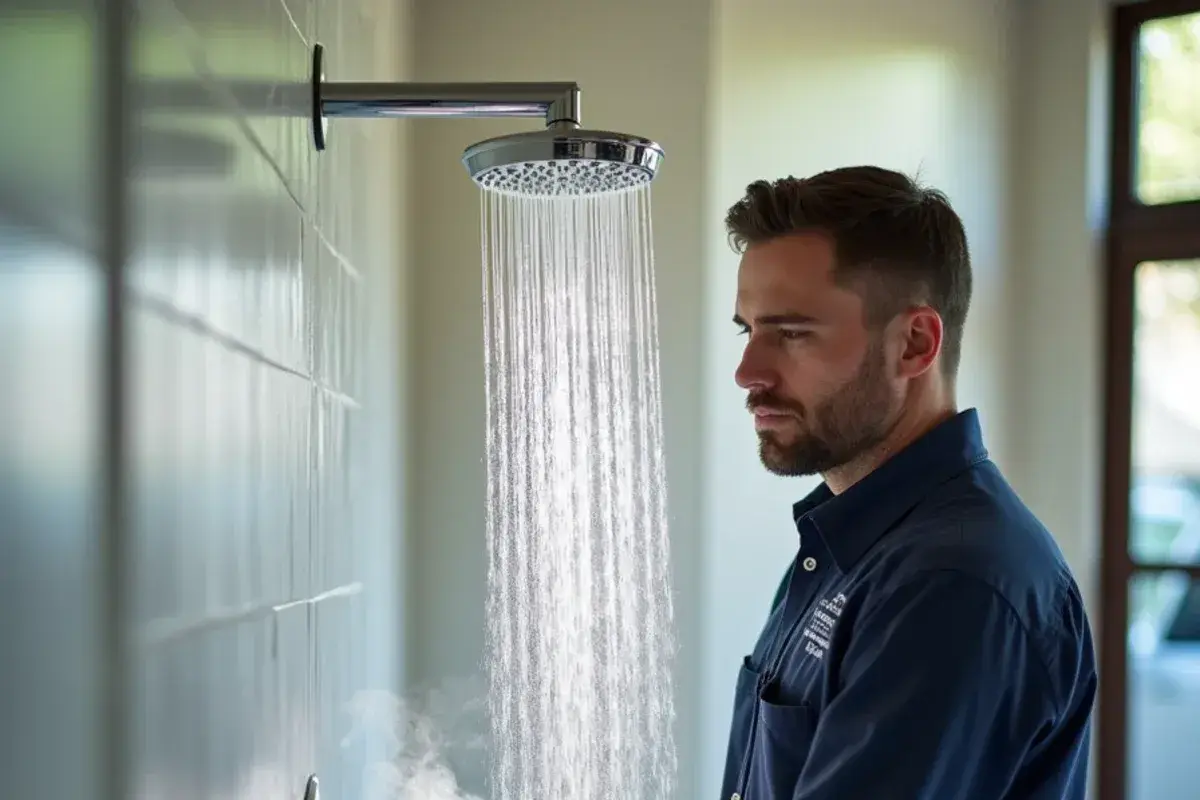
The first is the cold-water sandwich. You shower, turn the water off briefly, then turn it back on. Hot water still in the pipe arrives first, then a slug of cold water passes through while the burner relights, then hot water returns.
The second is minimum flow. A tankless unit only fires when water moves past its flow sensor at or above a set rate, listed on the data plate. A low-flow showerhead, a tap barely cracked open or a clogged inlet screen can drop below it, and the burner shuts off.
The opposite limit matters too. Typical units deliver about 2–5 gallons per minute, and gas models reach higher flow rates than electric ones. Run two showers and the dishwasher on a unit sized for one bathroom and the outlet temperature falls.
Troubleshooting
Tankless symptoms, likely causes and fixes
Use this to sort the quick fixes from the calls that need a plumber.
| Symptom | Likely cause | Who fixes it |
|---|---|---|
| Brief cold burst after reopening a tap | Cold-water sandwich | Normal; a recirculation setup reduces it |
| No hot water at low flow only | Below minimum flow, clogged aerator or inlet screen | Homeowner: clean screens, open the tap further |
| Temperature drops with several fixtures open | Demand above the unit’s rating | Plumber: second unit or a larger one |
| Hot water slowly weaker over months | Scale in the heat exchanger | Homeowner or plumber: descale |
| Unit fires, then shuts off with an error | Venting, combustion air or gas supply fault | Plumber |
| Works alone, fails when the furnace or range runs | Undersized gas line or meter | Plumber, with a permit |
Start with the free checks. Clean the cold inlet screen, check that the gas valve and power are on, and confirm the cold supply valve is fully open. Anything involving the burner, the vent or the gas line is a service call.
How-to
How do you descale a tankless water heater?
On hard water this is the single most useful piece of maintenance. Follow your manual’s interval; on very hard water you will need it more often.
Shut off power and gas
Unplug the unit or switch off its circuit, and close the gas valve on the supply line. The burner must not fire with no water moving.
Close the isolation valves
Turn the hot and cold isolation valves below the unit to closed. These valves are what make descaling possible without draining the house.
Connect the pump hoses
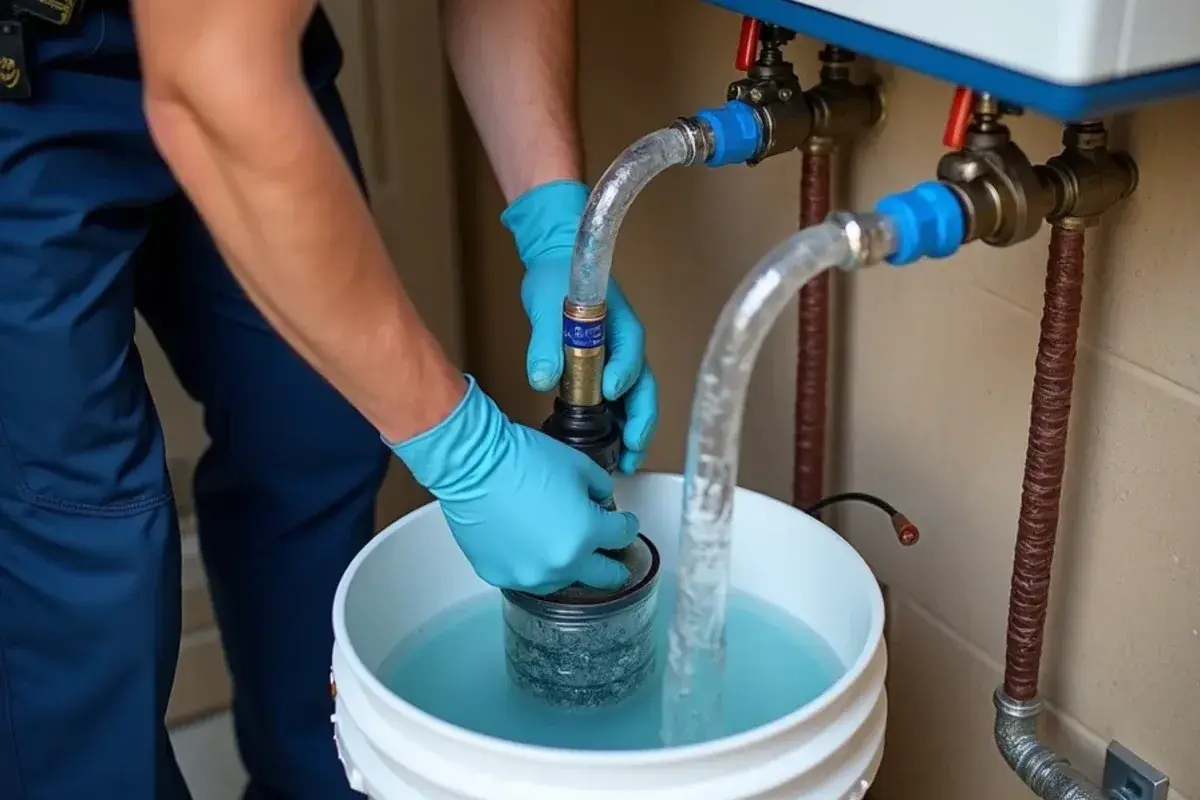
Run a hose from a small submersible pump to the cold service port. Run a return hose from the hot service port back into the bucket of descaling solution.
Circulate the solution
Open both service ports and run the pump for the time the manual specifies, often around an hour. Food-grade descaler or white vinegar is typical.
Flush with fresh water
Remove the pump, put the hot-side hose into a drain and briefly open the cold isolation valve to flush the solution out.
Clean the inlet screen and restore service
Close the service ports, clean the cold inlet screen, reopen both isolation valves and bleed air at a hot tap before restoring gas and power.
No isolation valves? Then the unit was installed without an easy way to service it, and adding a valve kit is the first fix. Georgetown’s city water runs about 10–11 grains of hardness from two plants and about 19 from the other two, so this matters here.
Expert insight
Venting and gas sizing: problems built in on day one
Some tankless trouble is not wear at all. It was installed in.
A whole-house gas tankless unit fires a far larger burner than a tank heater, but only while water runs. The gas pipe, the regulator and the meter have to deliver that peak with the furnace and range running too. A tank heater’s old half-inch line often cannot, and the symptom is ignition failures or flame loss under load.
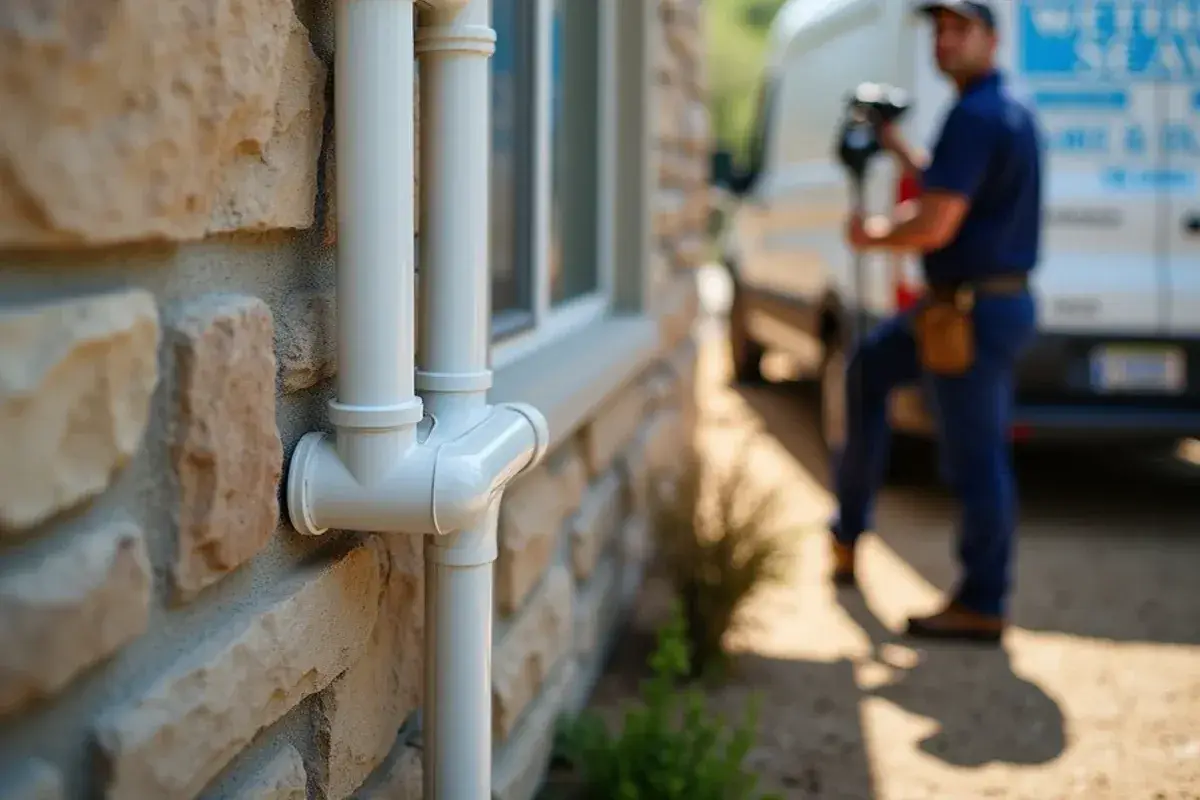
Venting is the other built-in risk. Condensing units vent through PVC or polypropylene and need a condensate drain, often with a neutralizer. Non-condensing units need stainless steel or other rated vent pipe. Reusing a tank heater’s old metal flue for either is a mistake that shows up as vent errors, corrosion or worse.
Our honest view is that most chronic tankless complaints trace back to the install, not the unit. A tankless water heater conversion is a gas, venting and water job together. Gas line work follows Atmos Energy rules. Most cities in the area require a permit for water heater replacements and gas lines, and we pull it when the job requires one.
Carbon monoxide is not a tankless problem to troubleshoot yourself
If a gas unit’s vent is disconnected, crushed or blocked, or a CO alarm sounds, shut off the gas to the heater, ventilate and call for service. Do not reset the unit and keep using it.
Error codes
What do tankless error codes usually mean?
Every maker numbers its codes differently, so look up the exact code in the manual or on the label inside the cover. The categories behind them are much the same across units.
- Ignition failure: no flame after several tries, often gas supply, an air-locked new line or a closed gas valve
- Flame loss: the flame lit then went out, often low gas pressure under load or a venting fault
- Overheat or high-limit: the heat exchanger ran too hot, often scale or restricted flow
- Flow sensor or low flow: water movement not detected, often a clogged screen or a failing sensor
- Vent or air-pressure fault: blocked termination, a long vent run or a failed fan
- Freeze or temperature-sensor faults: common after a power cut in cold weather
One reset after a power blip is reasonable. A code that keeps returning is the unit protecting itself, and repeated resets only hide the cause.
Local conditions
Lakeway water pressure, Cedar Park retrofits and freeze protection
On the hilly lots of Lakeway, water pressure often runs high. Excess pressure strains a tankless unit’s valves and fittings, so a working pressure-reducing valve on the main is part of protecting it. Homes from the 1970s and 80s there may have a PRV that is long overdue.
In Cedar Park, many conversions happen in 1980s and 90s houses built around a tank heater. That means the gas line, the vent route and the garage wall all need a fresh look before a tankless unit goes up.
Then there is cold weather. Tankless units have small electric freeze-protection heaters, but they need power. Winter Storm Uri in February 2021 burst pipes across the county. A unit left full of water without power during a hard freeze can crack the same way. Draining the unit through its service ports before a long outage is cheap insurance.